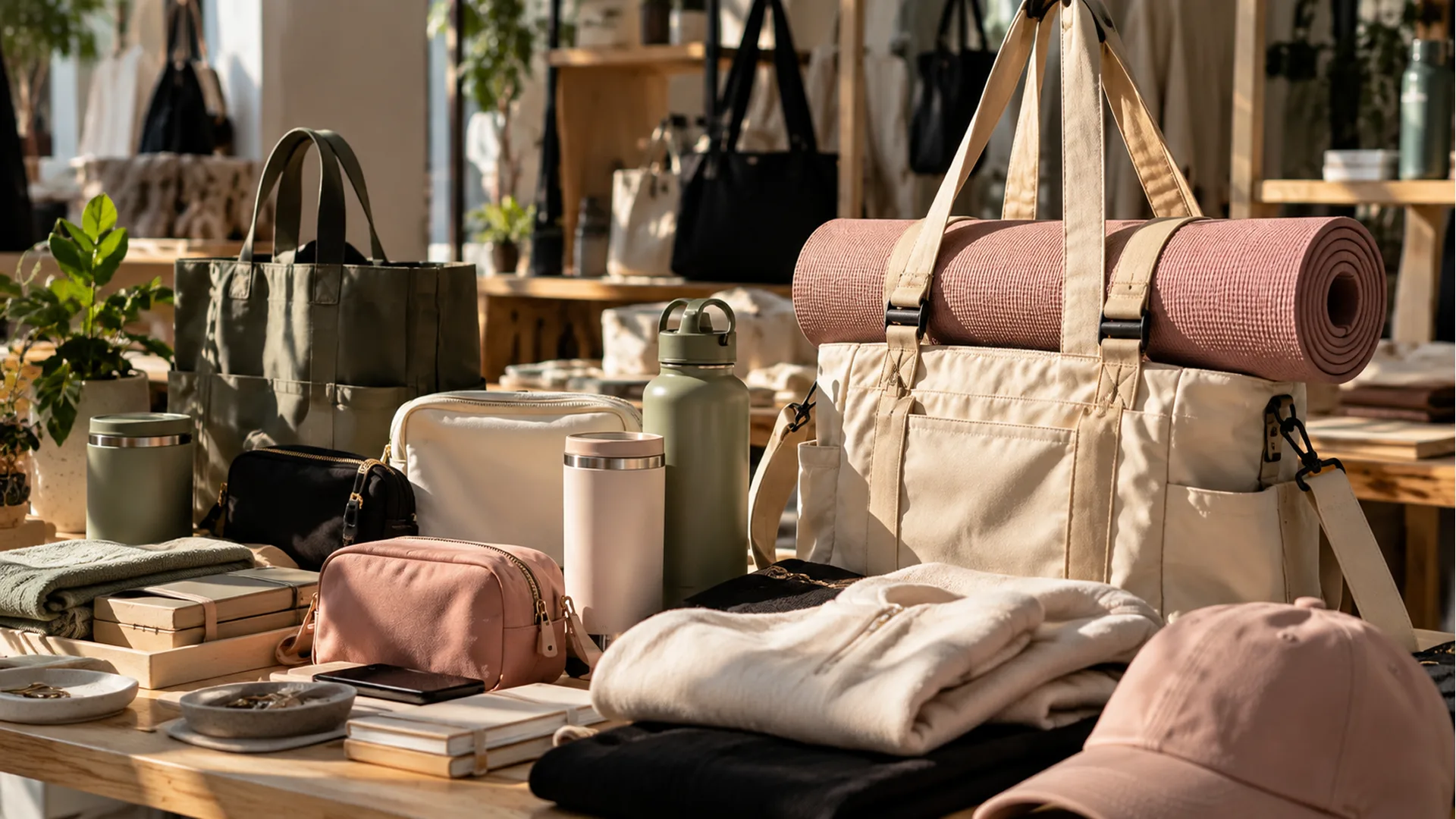
When companies think about branded merchandise, the conversation often starts with the logo: where to place it, how large it should be and which color to use.
But we believe the process should start with a different question:
Would someone still want to use this product if the logo were not there?
If the answer is yes, branding can add identity to an already valuable product. If the answer is no, even great design will struggle to turn an unwanted item into good merchandise.
Merchandise is a product first
Before thinking about logo placement, look at the product itself: its quality, materials, functionality, design and relevance to the brand's audience.
Strong branded merchandise starts with a good product, not with a logo.
It could be a bag, bottle, cosmetic pouch, sports accessory, travel set, clothing item, home product or something entirely different.
What matters is that the product has value on its own.
More than a giveaway: merchandise can become a product line
Merchandise does not have to be a free promotional item added to an order or handed out at a corporate event.
For some businesses, it can become a separate product category and an additional revenue stream.
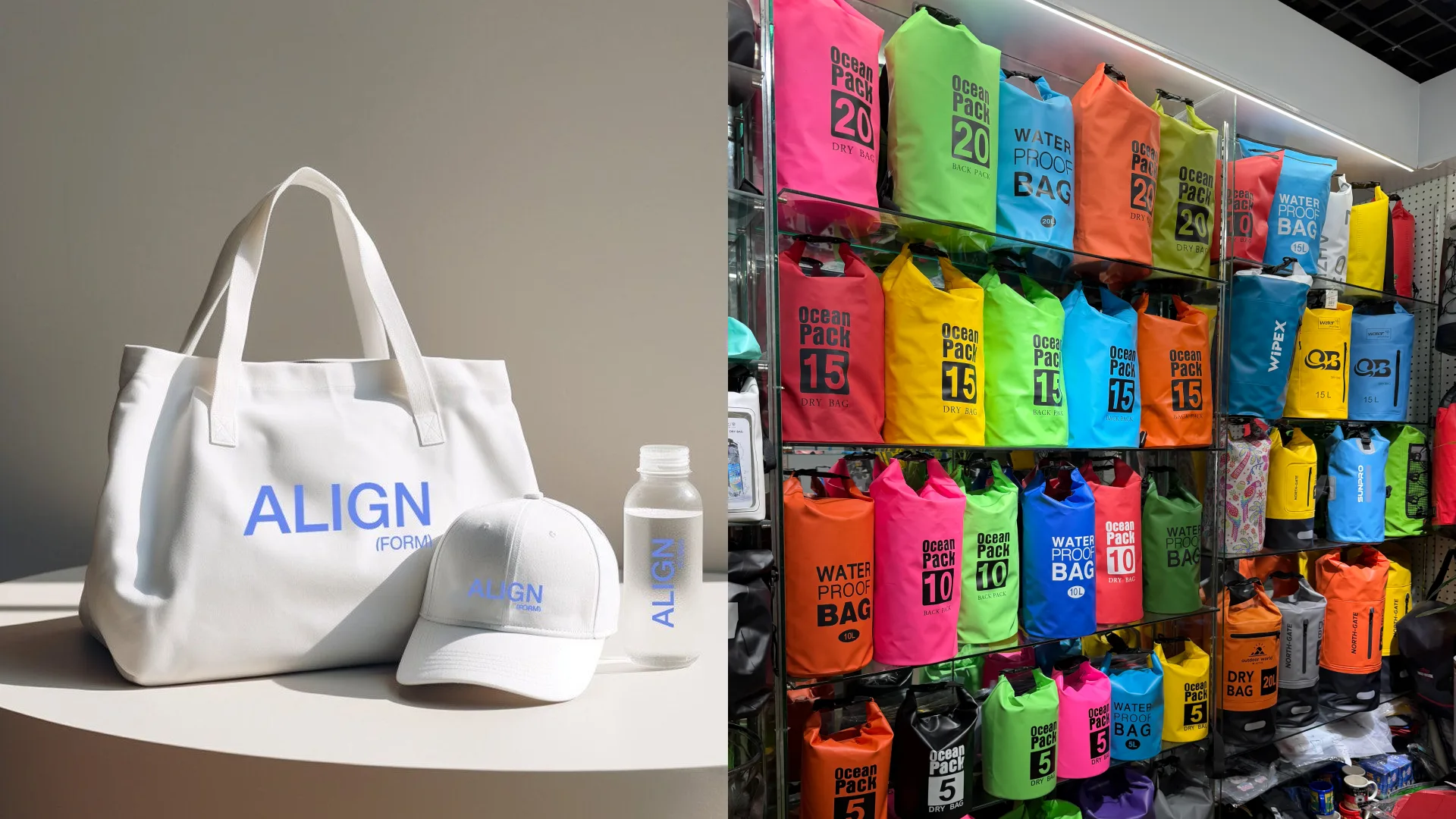
A yoga or Pilates studio, for example, does not necessarily need another standard tote bag with an oversized logo.
A more relevant product could be a stylish everyday bag with a dedicated yoga-mat attachment — something customers can use well beyond the studio.
In this case, the brand is not selling an advertisement with its logo on it. It is selling a useful lifestyle product.
What can be customized when producing merchandise in China?
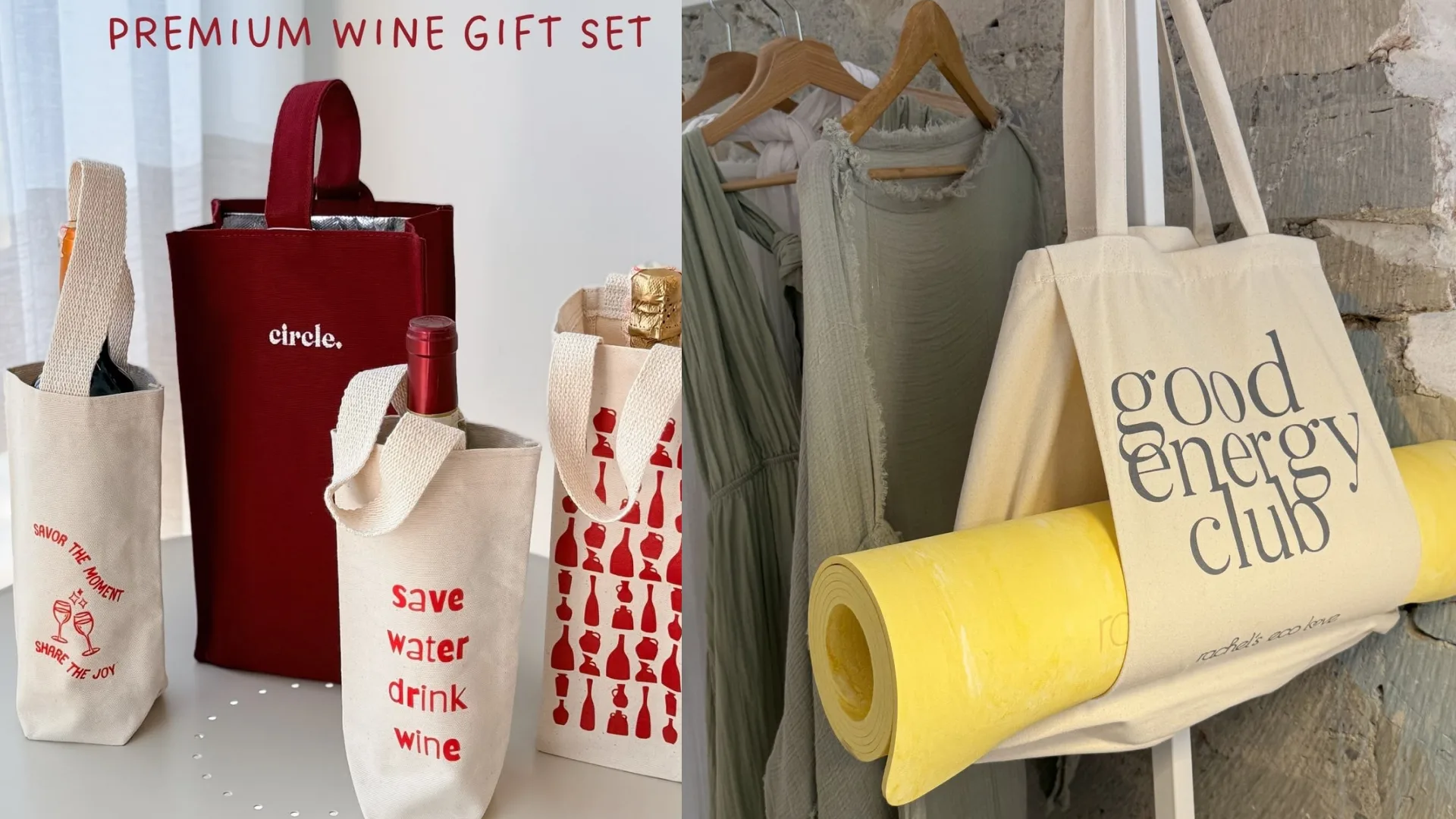
Branding can go far beyond printing a logo on an existing item.
Depending on the product and manufacturer, customization can include:
- materials;
- colors;
- dimensions and shape;
- construction and functional details;
- hardware;
- embroidery, printing, embossing and other branding techniques;
- labels and tags;
- custom packaging;
- product sets and combinations.
The earlier customization becomes part of the product-development process rather than a final logo-placement step, the more cohesive the result can be.
Why brands manufacture merchandise in China
One of China's main advantages is not simply price.
The manufacturing ecosystem provides access to an enormous variety of factories, materials, components and production capabilities. This makes it possible to compare solutions and adapt a product to a specific brief.
For one project, an existing model with a custom color and branding may be enough. For another, the material, construction, hardware, packaging or even the product itself may need to be adapted.
The goal is not to find any factory willing to add a logo. It is to find a manufacturer that fits the product and the brand's requirements.
How we search for merchandise products in Yiwu
Online catalogs provide thousands of options, but they do not always show how a product actually looks, feels and functions in real life.
That is why part of our product research happens directly on the ground in China.
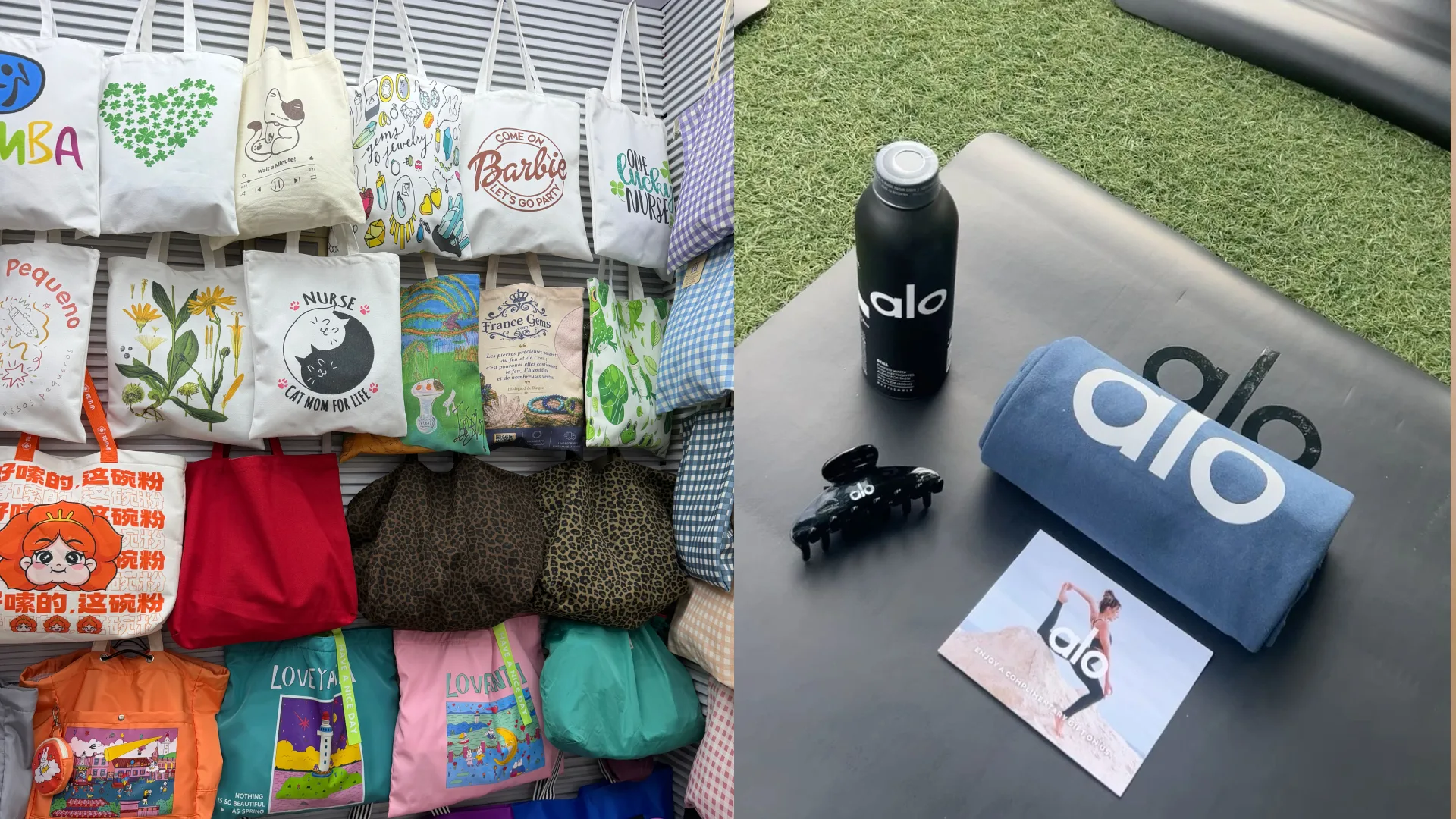
For a recent client request, our team explored different bag formats at Futian Market in Yiwu — including everyday bags, laptop bags, options designed to carry yoga mats and other styles.
Being on site allows us not only to see more options, but also to compare materials, construction, dimensions, hardware and customization potential immediately.
This is particularly useful when a client has an idea or reference but has not yet decided which product format is the best fit.
Product quality matters more than a beautiful logo
Even excellent branding cannot compensate for poor fabric, weak zippers, impractical construction or low-quality packaging.
Before mass production, it is therefore important to evaluate the product itself, not only how the branding looks.
Depending on the project, this can include checking samples, materials, colors, dimensions, hardware, logo application and packaging.
Merchandise represents the brand even when there is no advertisement around it.
That is why the quality of the physical product directly affects the impression it creates of the company.
From one product to a complete branded set
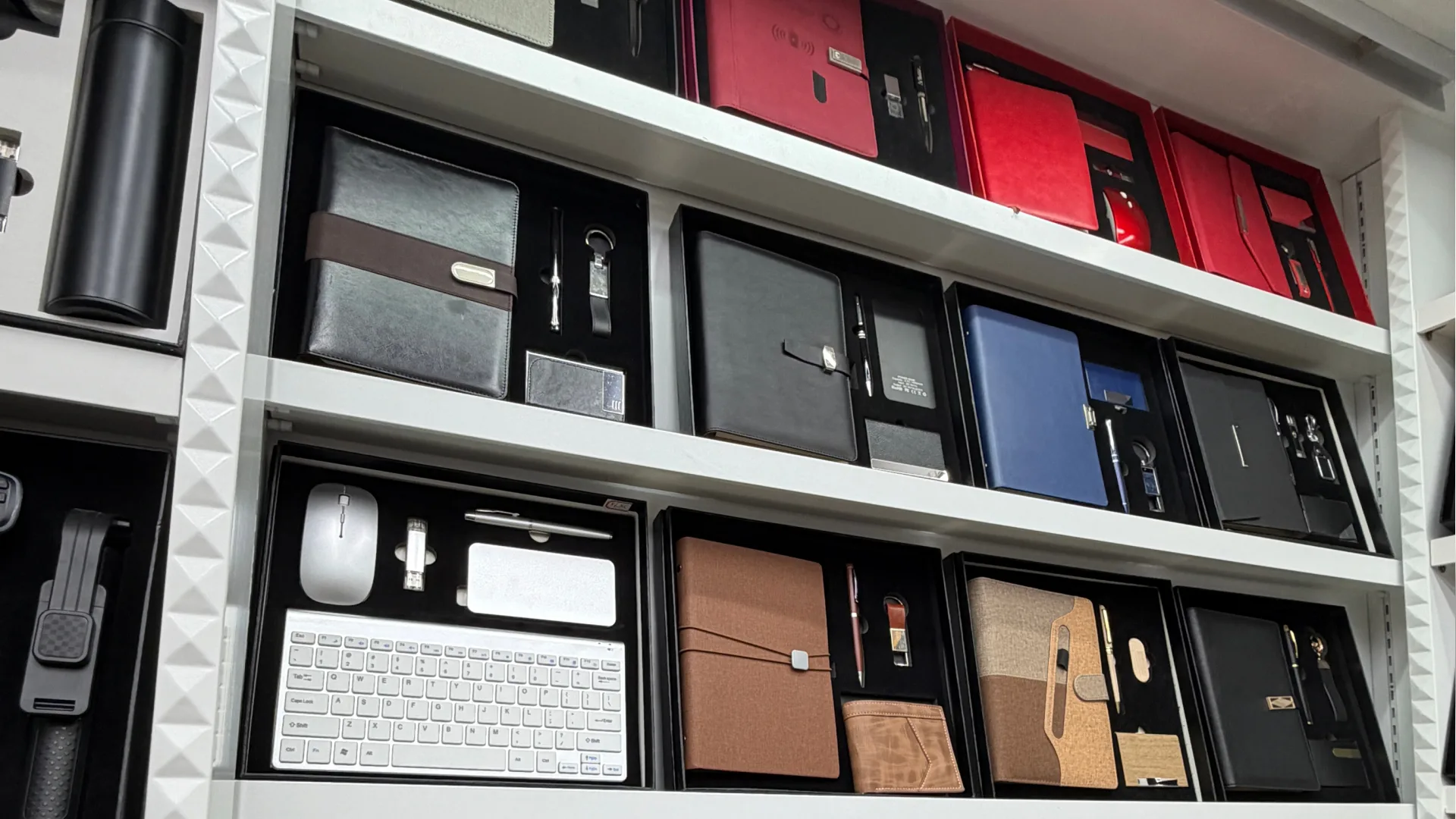
Sometimes the best solution is not a single item but a coordinated set of products.
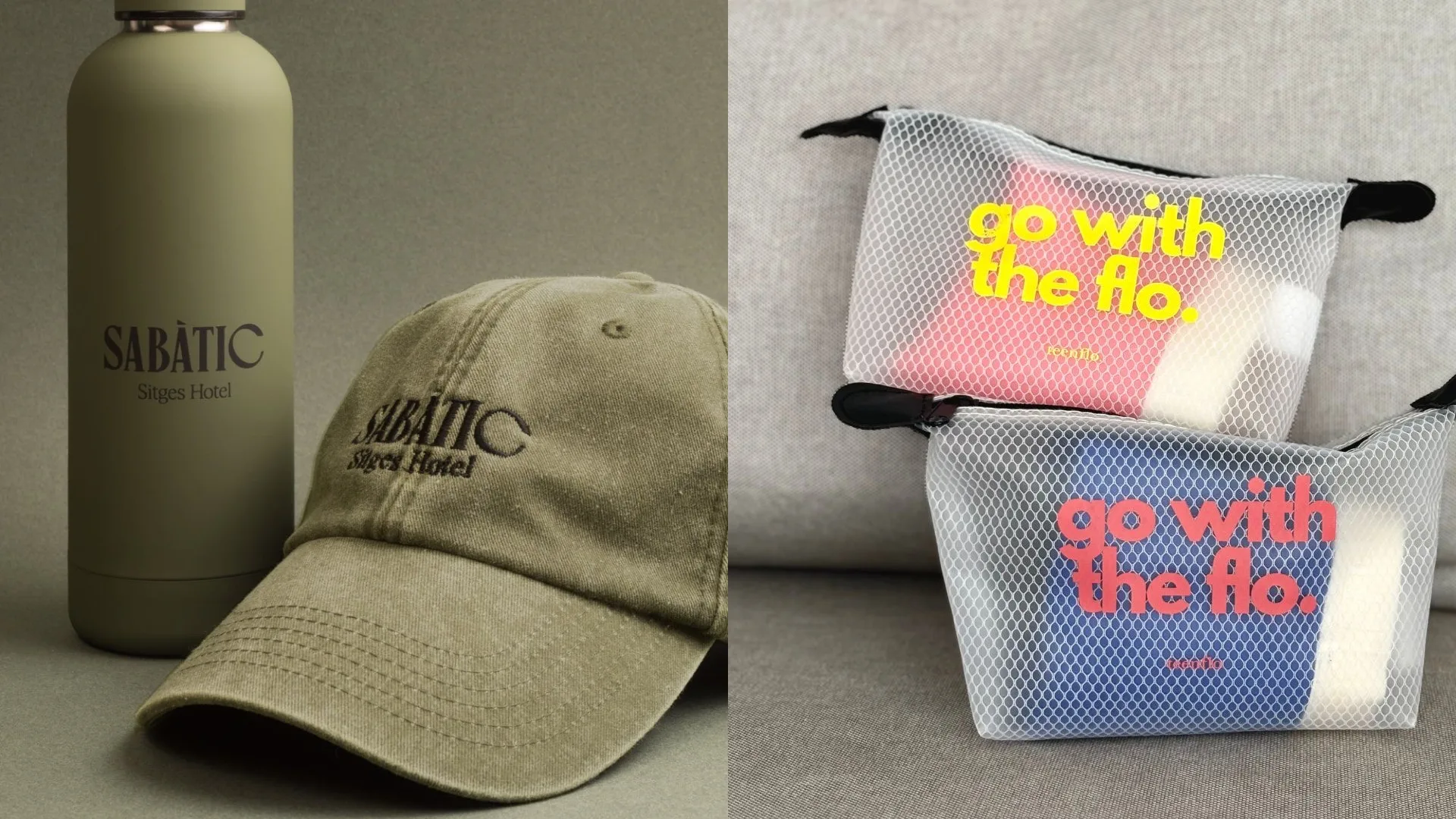
A set might combine a bottle, bag, cap, cosmetic pouch, notebook, travel accessories or other items selected for a particular audience and use case.
Colors, materials, branding, packaging and even the way the items are presented can be coordinated.
This turns merchandise from a collection of random promotional items into a coherent extension of the brand.
How branded merchandise production in China works
The exact process depends on the product, but it will often include:
- Product idea and requirements.
- Product and manufacturer research.
- Comparison of materials, construction and customization options.
- Manufacturer negotiations.
- Sample ordering and review.
- Approval of colors, branding and packaging.
- Mass production.
- Quality control.
- Consolidation when required.
- Preparation for international delivery.
In practice, this is a complete product-development process — from the initial idea to a finished production batch.