Finding a supplier in China is only the beginning.
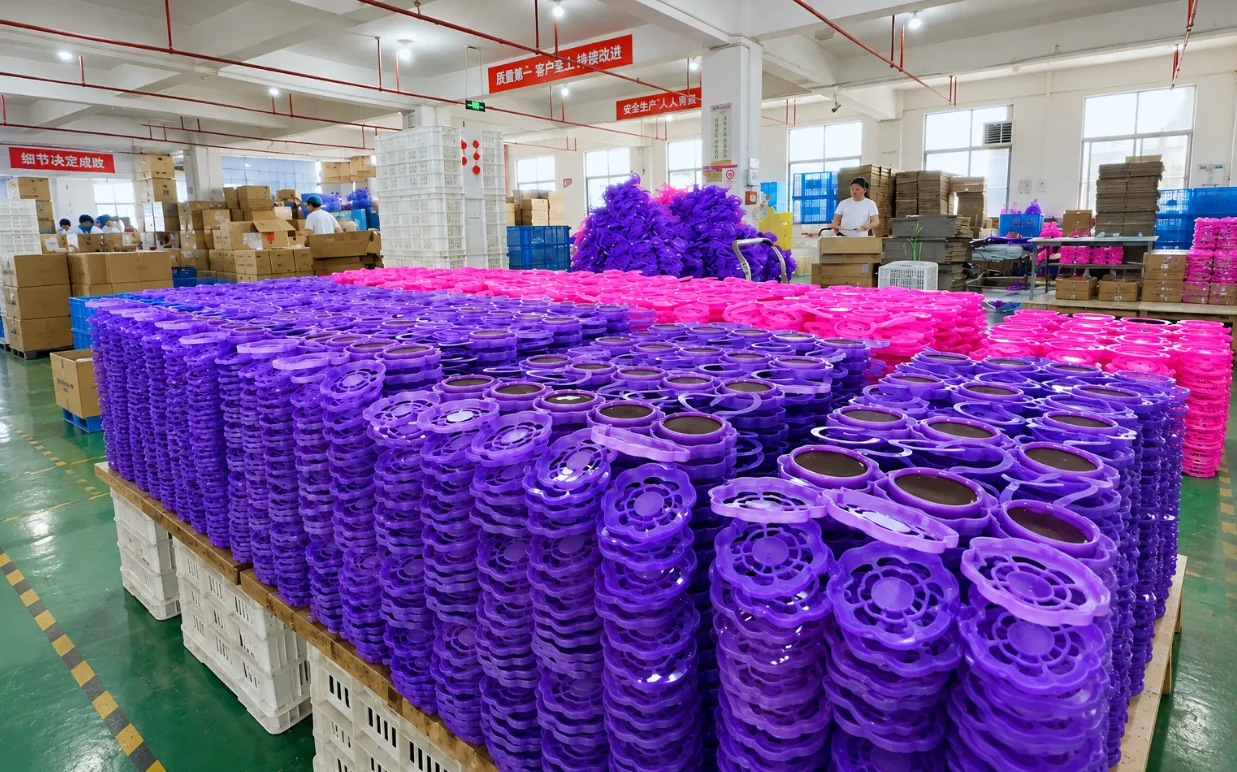
A factory may assemble, package and brand a finished product without actually manufacturing every component behind it. We saw this first-hand while working on an order of laundry capsules.
What started as a routine factory visit for product testing and fragrance selection revealed another supplier behind the production process — and changed the way we approached the project.
The factory was not producing everything itself
We visited the factory to inspect the laundry capsules, evaluate the product and choose fragrances for the final order.
During the visit, we discovered an important detail: the factory did not manufacture the liquid formulation used inside the capsules.
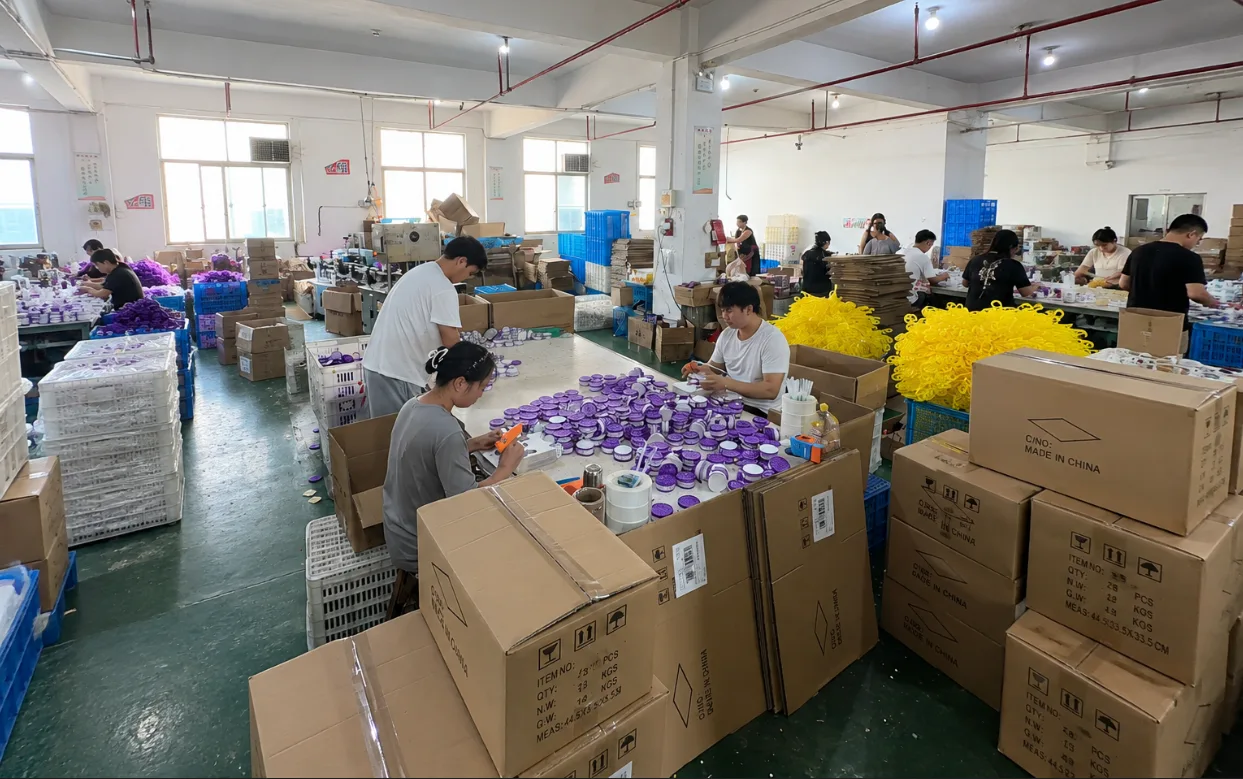
Its role covered other stages of production — including adding fragrances, filling and packaging the capsules, branding and preparing the finished product.
The liquid itself came from another manufacturer.
For an importer, this distinction matters. If there is an issue with the formulation, washing performance or consistency, checking only the final packing facility does not give you the full picture of the supply chain.
We went one step further in the supply chain
Instead of treating the packing factory as the only supplier involved, we established communication with the manufacturer supplying the liquid formulation.
From that point, negotiations involved both sides.
This gave us a clearer understanding of who was responsible for each stage of the product and allowed the technical and commercial details to be discussed with the companies actually responsible for them.
This is one of the reasons why supplier verification should go beyond a company profile, quotation or factory address. A finished product can involve several manufacturers even when the buyer initially communicates with only one supplier.
Product selection before mass production
The project wasn't limited to checking documents or walking through the factory.
We evaluated different product options and fragrances directly on site. After testing the available variants, we selected two fragrances for the order:
- Floral
- Ocean
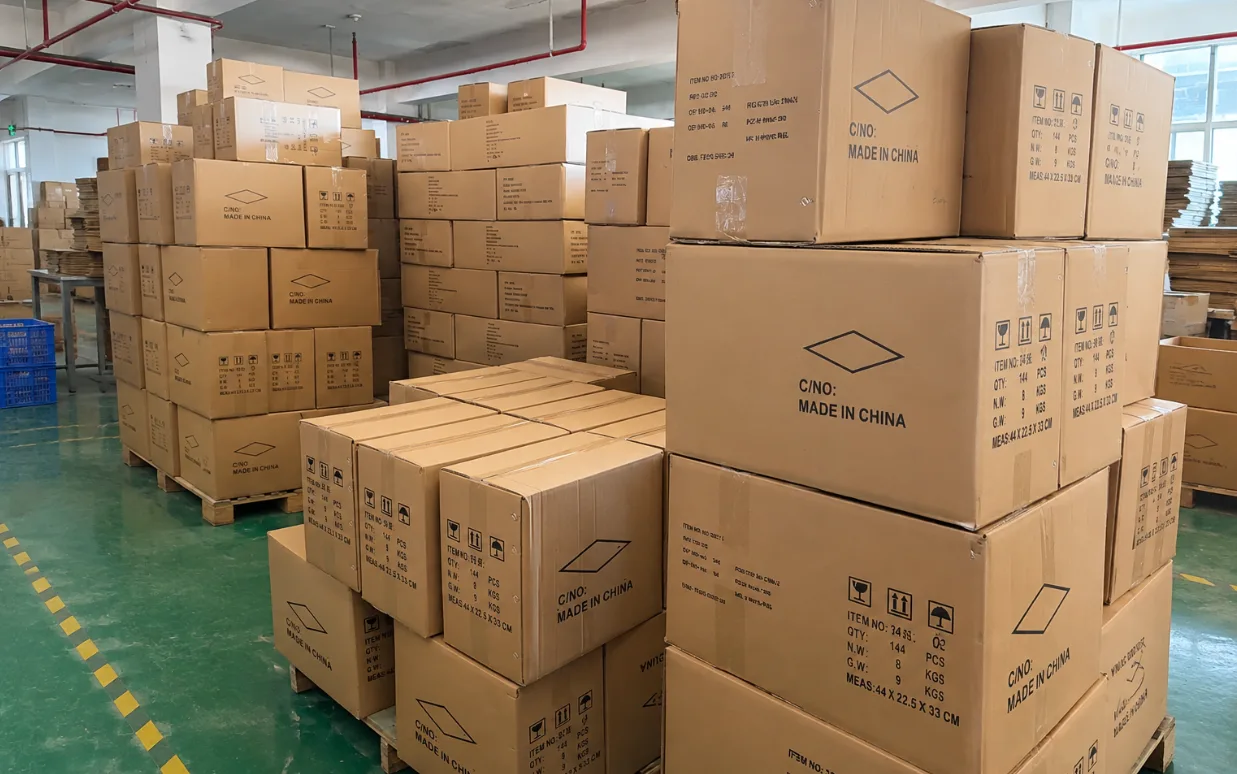
The final order was 850 cartons of each fragrance — 1,700 cartons in total, which resulted in two 20-foot containers.
Quality control did not happen only once
One factory visit is not always enough for a production order.
We returned several times during the project to inspect the goods at different stages.
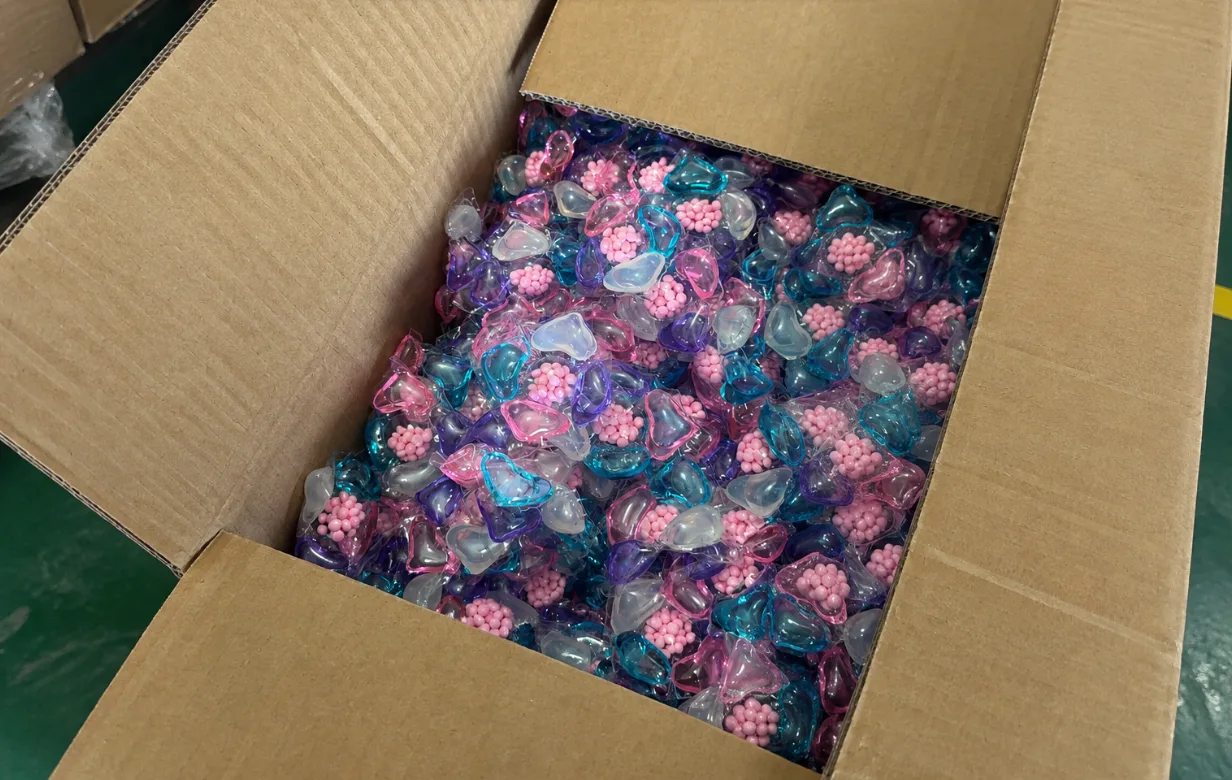
The checks included opening cartons and inspecting capsules from the actual production batch rather than relying only on prepared samples.
We checked the appearance and condition of the capsules, compared the product across boxes and evaluated the fragrances.
But there was another test that mattered just as much.
We took product samples with us and used them for actual laundry.
The goal was simple: see how the capsules behaved in normal use and evaluate the washing result ourselves before the full shipment left China.
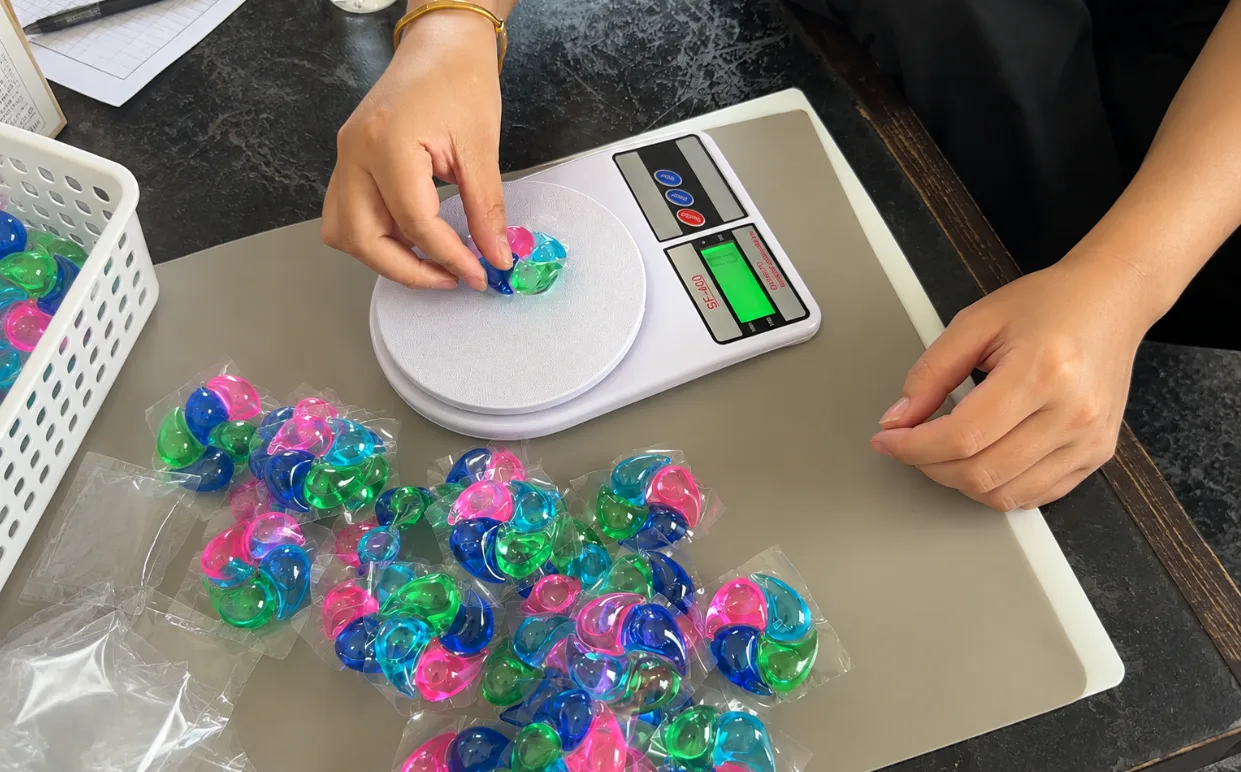
That type of testing cannot replace laboratory testing when laboratory certification is required. But for practical product evaluation, it gives the buyer another layer of information that a specification sheet alone cannot provide.
Production and packaging also need to be checked
Product quality is only part of a finished order.
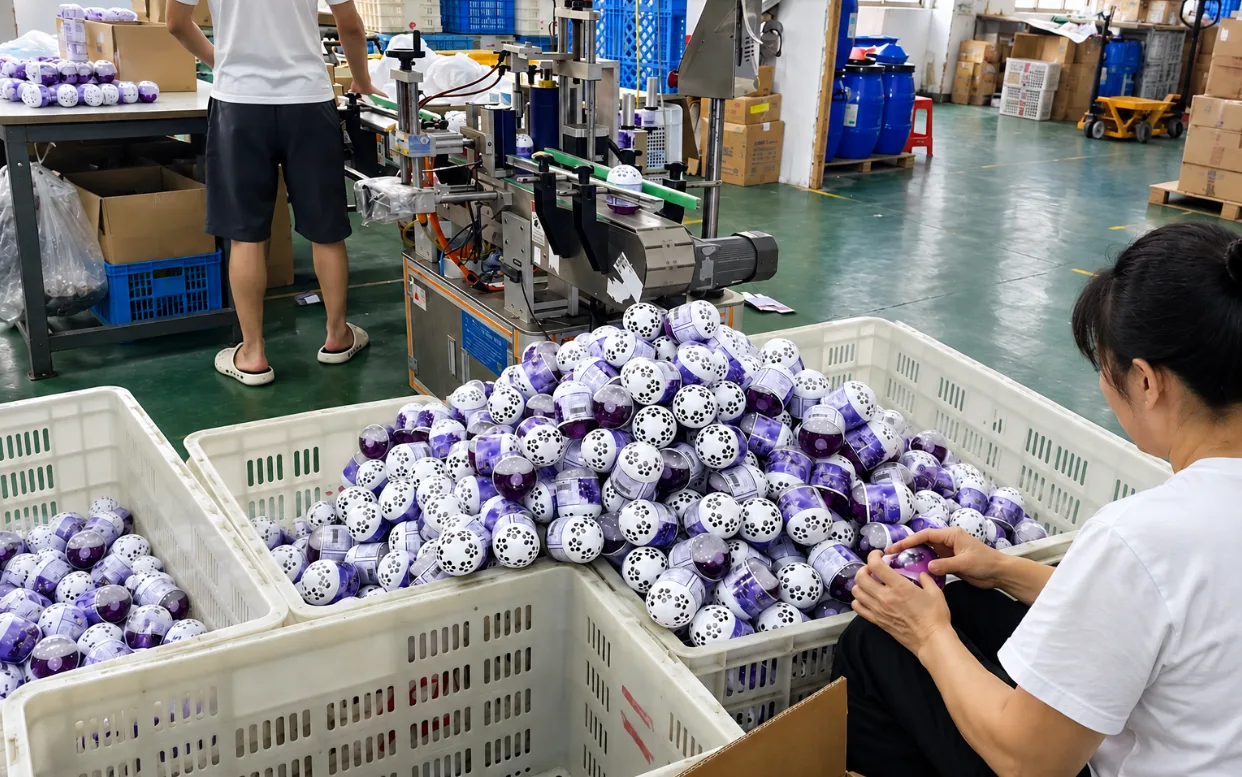
During the factory visits, we could also see the production and packing process in operation and inspect how the goods were being prepared.
For international orders, problems can appear even when the product itself is correct: incorrect packaging, labels, quantities or poorly prepared cartons can create issues later in the supply chain.
That is why the inspection should look at the finished order as a whole — not only at the product inside it.
The final result: 1,700 cartons ready for shipment
After product selection, negotiations and repeated inspections, the order consisted of:
- 2 fragrances
- 850 cartons per fragrance
- 1,700 cartons in total
- 2 × 20-foot containers
What looked at first like a straightforward order of laundry capsules turned into a good example of how manufacturing in China can actually work.
The company selling and packing the finished product was only one part of the supply chain.
Without visiting the factory, asking how the product was made and tracing the formulation back to its actual supplier, that structure would have remained invisible.
What businesses should check before ordering from a factory in China
Before placing a large production order, it is worth establishing several things clearly:
- What does the supplier actually manufacture? Do not assume that every component is produced in-house.
- Which parts of the product come from other manufacturers? Understanding the upstream supply chain helps identify where quality issues can originate.
- Who is responsible for the formulation, components, packaging and branding? These may be different companies.
- Can you inspect goods during production, not only before shipment? Earlier checks leave more time to correct problems.
- Can the actual production batch be tested? A pre-production sample and mass-produced goods are not automatically the same thing.
For China2EU, factory inspection is not simply about confirming that a factory exists.
It is about understanding how the order is actually produced, who is responsible for each stage and whether the finished goods match what the client agreed to buy.