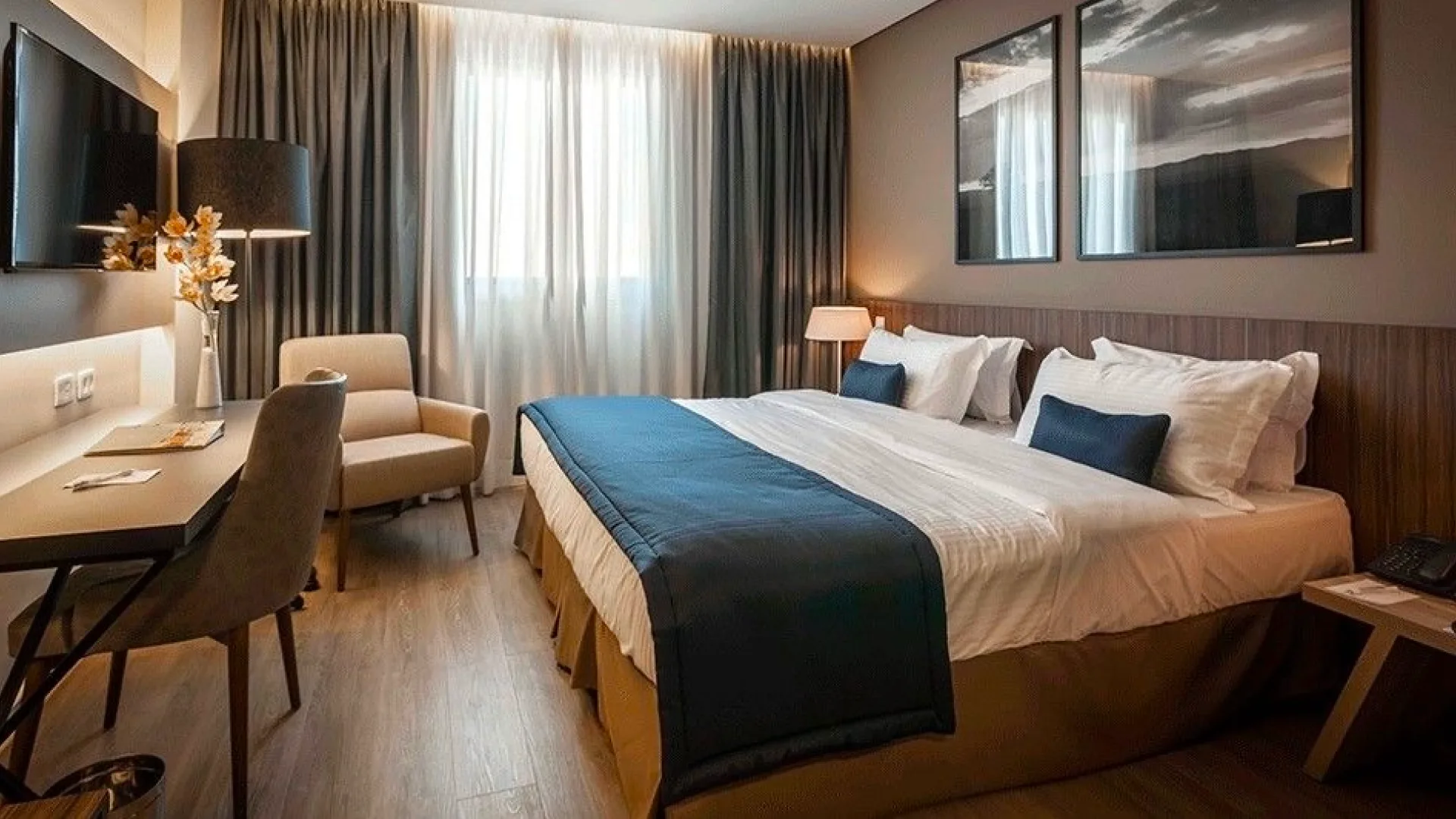
Furnishing a hotel can look like a straightforward purchasing task: define the furniture and equipment list, collect supplier quotations and choose the best price. But even for a 40-room boutique hotel, the quoted product price is only one part of the project’s real cost.
For example, the same bed may be quoted at $450 by one supplier and $290 by another. A 36% difference looks compelling until you compare specifications, durability, quality control, packaging, consolidation, shipping and the costs that arise after the cargo arrives.
You are not buying furniture — you are equipping an entire business
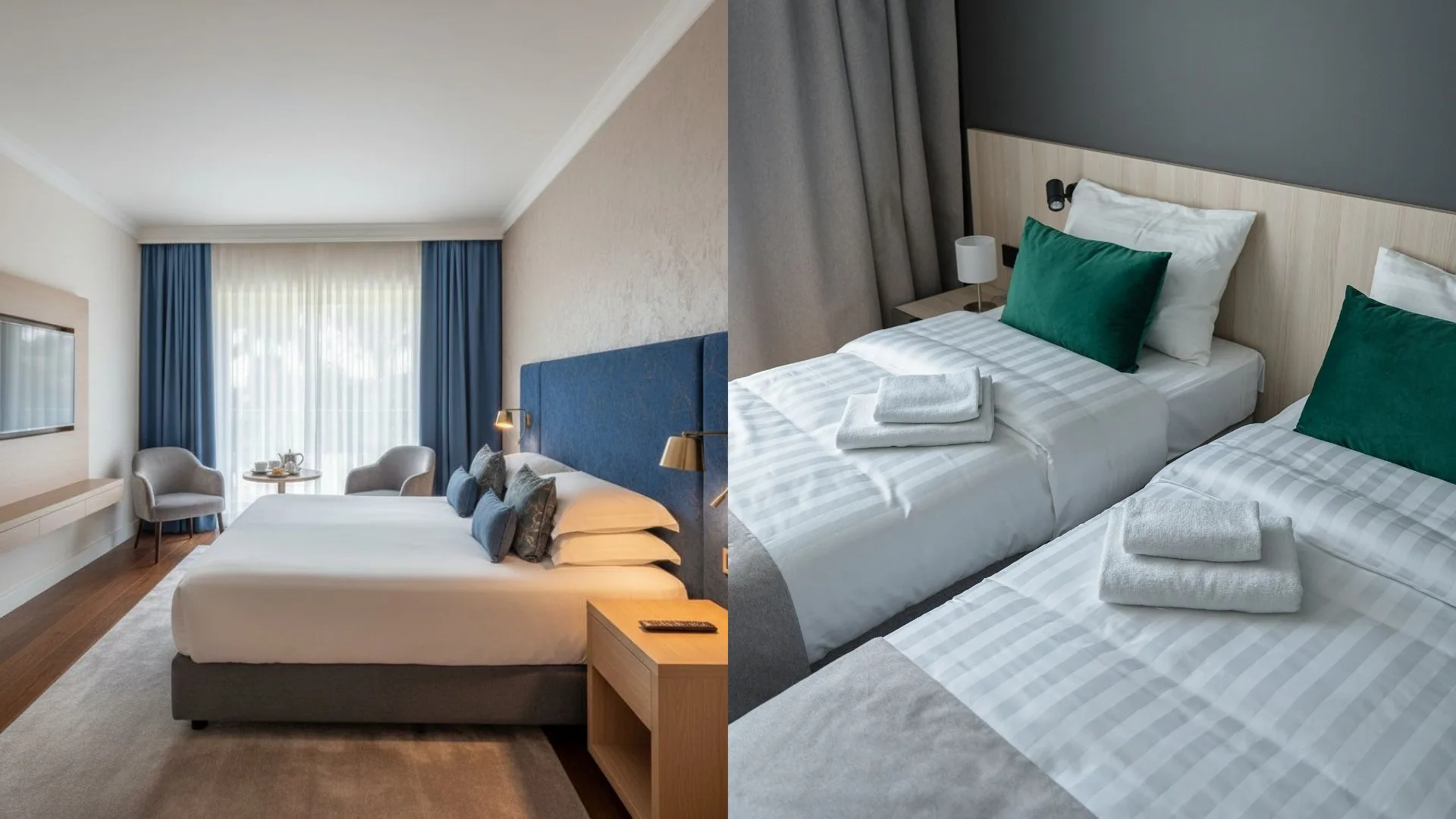
A hotel project includes dozens of connected FF&E and OS&E categories. Guest-room requirements commonly include:
- beds, mattresses, headboards and bedside tables;
- wardrobes, desks, chairs and luggage racks;
- lighting, mirrors, curtains and décor;
- bedding, pillows, duvets and towels;
- bathroom accessories and guest amenities;
- branded slippers, toiletries and packaging.
Common areas add another layer of purchasing:
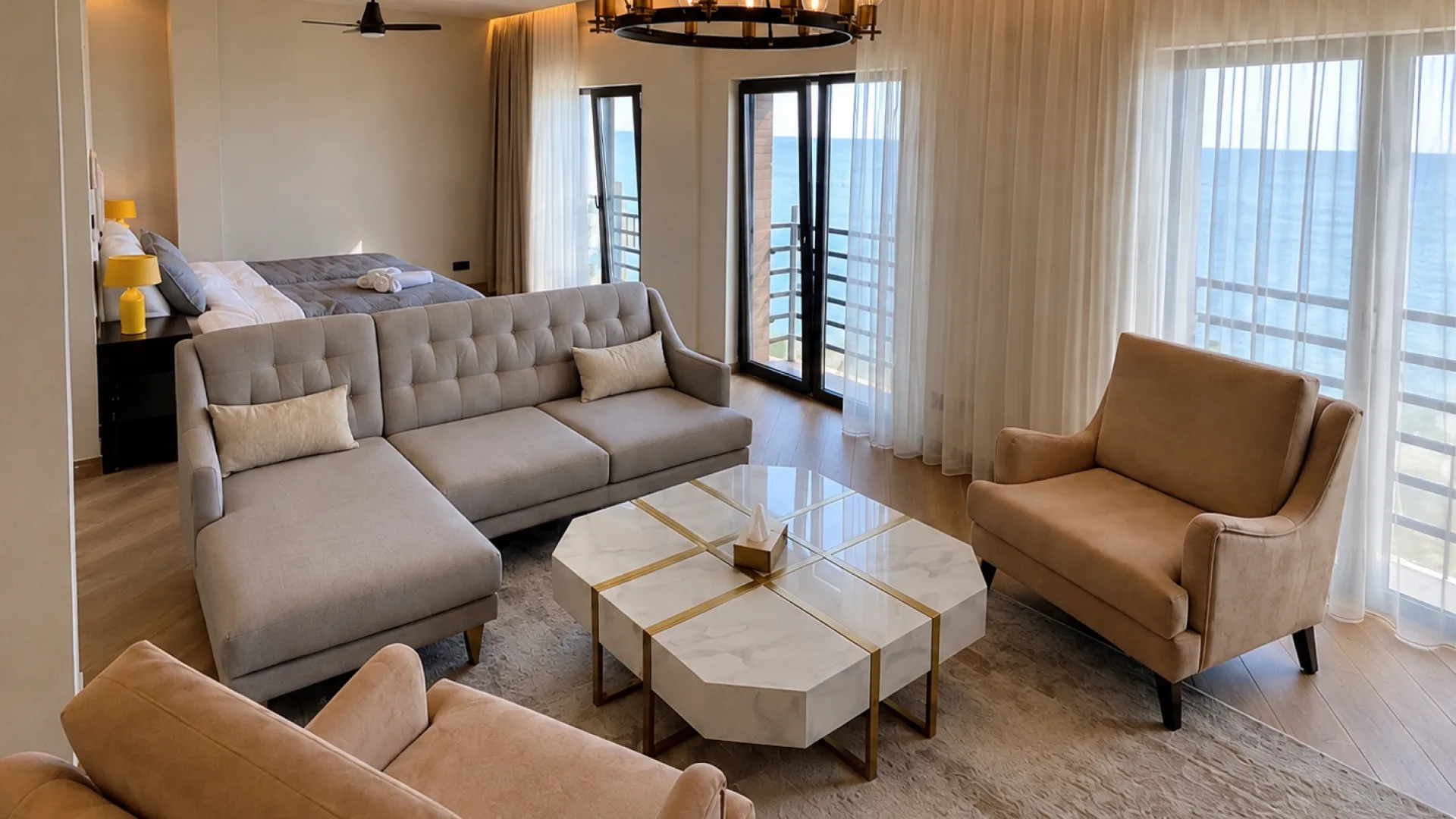
- lobby and lounge furniture;
- reception desks and decorative lighting;
- restaurant tables, chairs and tableware;
- outdoor furniture and terrace equipment;
- signage, accessories and operational supplies.
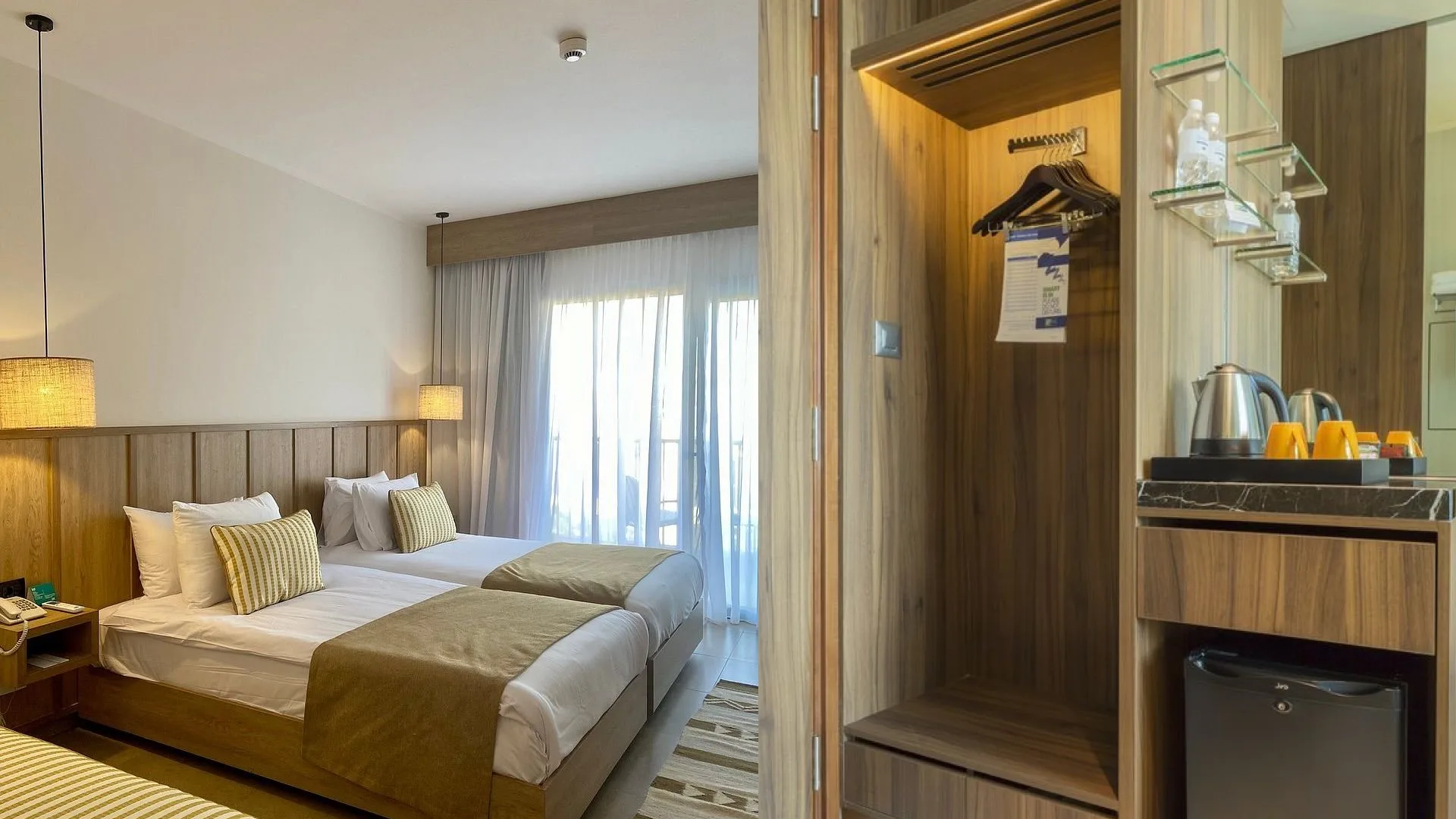
Every item has its own technical requirements, minimum order quantities, production lead times and packing rules. Hotel FF&E procurement is therefore a coordinated system, not a collection of unrelated purchases.
The lowest quotation can become the most expensive purchase
A low factory price says little about the lifetime cost of a product. For hotel furniture sourcing, buyers should evaluate:
- frames and joints built for commercial use;
- fabric and surface resistance to abrasion and frequent cleaning;
- foam density and resilience;
- structural stability and load capacity;
- finish quality;
- availability of spare parts and repeat-order consistency.
Define the specification before comparing prices
A meaningful comparison starts with agreed materials, dimensions, colours, hardware, packaging and acceptance criteria. Electrical products require checks for voltage, plug type and certification. Textiles should be reviewed for composition, weight, shrinkage, colourfastness and commercial laundering. All acceptance requirements should be confirmed before production begins.
The real number is landed cost — not the factory price
When buying hotel furniture from China, calculate landed cost: every expense required to bring the goods to the property and make them ready for use.
- product cost;
- samples and testing;
- inspections and quality control;
- domestic transport in China;
- warehouse handling and consolidation;
- export documentation and certificates of origin;
- international freight and insurance;
- customs duties, taxes, clearance and destination charges;
- final delivery, unloading, assembly and installation.
It is also important to separate non-recoverable project costs from payments such as import VAT, which may be recoverable in some jurisdictions. Incoterms matter too: an EXW quote and a DDP quote cover very different responsibilities and costs.
An illustrative budget comparison
For the same product scope and equivalent specifications, a hypothetical comparison could look like this:
- local procurement: products — $180,000, with the remaining costs included in the quoted local price;
- direct China procurement: products — $125,000;
- international freight, consolidation and delivery — $18,000;
- customs duties and other non-recoverable import charges — $10,000;
- samples, inspections and quality control — $3,000;
- project contingency — $7,000;
- total estimated cost: $180,000 locally versus $163,000 through direct procurement from China.
The potential difference is $17,000, or approximately 9.4%. These figures are illustrative only; they are not China2EU quotations or market benchmarks. Actual costs depend on destination, specifications, volumes, logistics and the applicable import-cost structure. Direct sourcing from China does not automatically save 9%, 30% or 50% — only a complete landed-cost calculation can show the real result.
One hotel, multiple factories — but not necessarily multiple shipments
A complete hotel project is rarely best supplied by one manufacturer. Ten, fifteen or more factories may be involved across furniture, lighting, textiles, bathroom accessories, tableware and branded products.
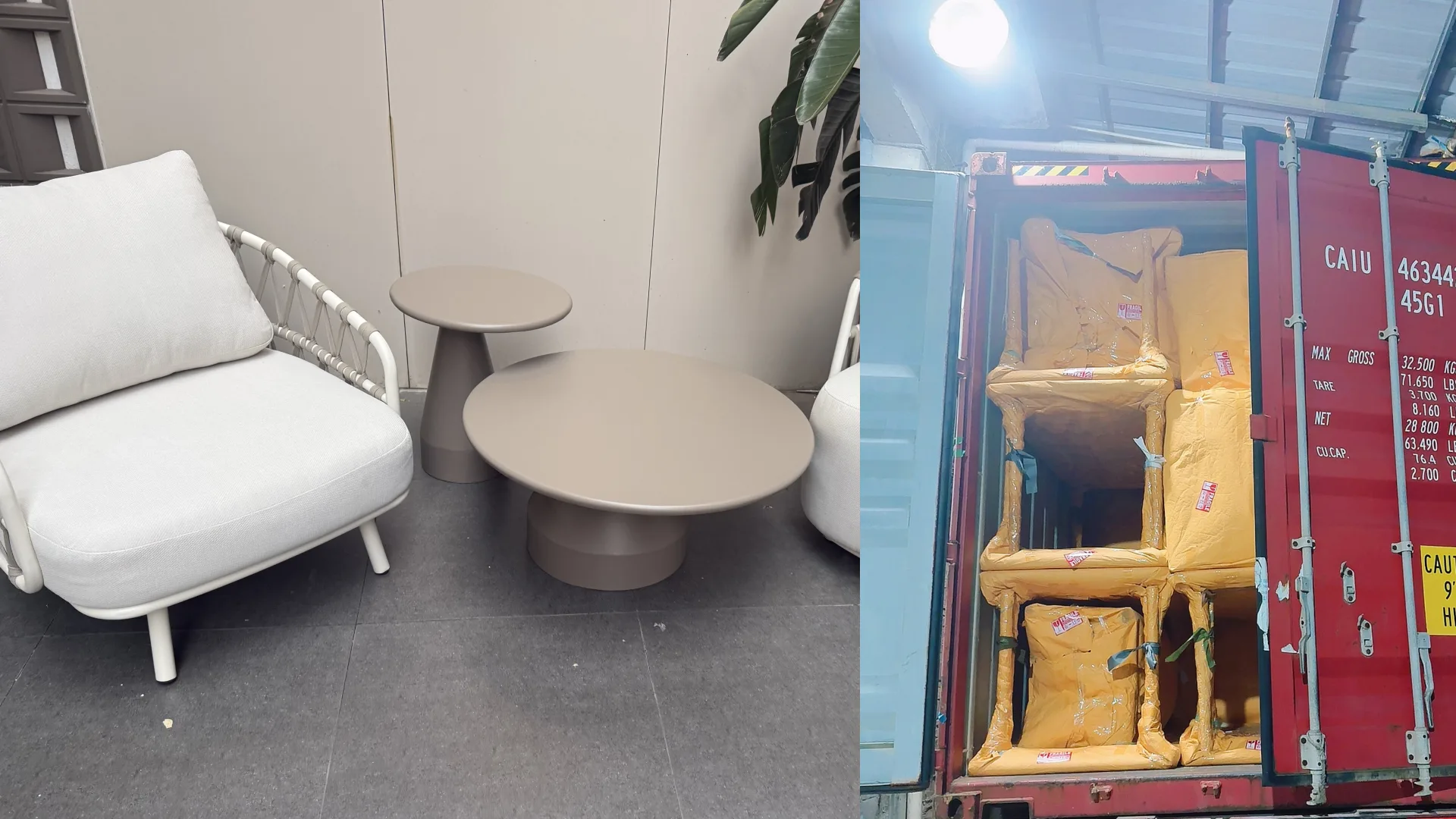
That does not mean every supplier needs a separate shipment. Goods can be delivered to a consolidation warehouse, inspected, repacked where necessary and combined into one or several coordinated loads. The economics depend on cargo volume and weight, packing dimensions, product compatibility, storage time, the property’s delivery schedule and destination requirements.
The most expensive mistakes often happen before shipping
Many costly problems begin before a container leaves China. Typical examples include:
- one factory’s “beige” not matching another supplier’s shade;
- a finish that differs from the approved sample;
- electrical components that do not meet destination standards;
- dimensions that do not fit the actual room layout;
- the production batch differing from the sample.
Final specifications, physical samples, an approved reference sample, in-production and pre-shipment inspections, and enough time for corrections before export all reduce these risks.
A real project: 45 containers for hospitality facilities in Ukraine
China2EU has more than 12 years of experience with sourcing for hotels, restaurants, resorts and commercial properties. In one project for hospitality facilities in the Kyiv region, the client approached us at the end of November 2025, shortly before the Chinese New Year period.
Production started in early December. The project required coordination across multiple manufacturers and product categories, inspections, loading and shipping. The result: all 45 of 45 containers were delivered, with only two chairs damaged.
That result does not mean large projects have no problems. Experience is the ability to anticipate risks, identify them early and resolve them before they delay a hotel opening.
A practical hotel procurement checklist
1. Project scope
- Is there a complete FF&E and OS&E list?
- Are quantities confirmed for guest rooms and common areas?
- Are technical requirements defined for every category?
2. Supplier selection
- Does the factory have commercial or hospitality-project experience?
- Have its production capabilities been verified?
- Are MOQs, lead times and warranty terms agreed?
3. Quality and compliance
- Have samples and reference materials been approved?
- Do electrical products meet destination-country requirements?
- Are in-production and pre-shipment inspections planned?
4. Budget and logistics
- Has the full landed cost been calculated?
- Are consolidation, insurance, customs clearance and final delivery included?
- Is there a contingency for changes and unexpected costs?
5. Final coordination
- Who controls the different factories and timelines?
- Who checks packing and container loading?
- Who is responsible for correcting discrepancies before export?